
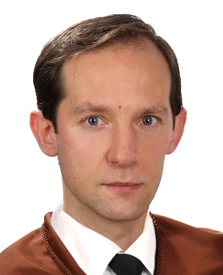
Professor Mariano Martín Martín
University of Salamanca
USAL-PF3
About
Professor Mariano Martín Martín is full Professor of Chemical engineering at the University of Salamanca and member of the Royal Academy of Sciences of Spain. He graduated with honours in the integrated BSc and MSc in Chemical engineering at USAL in 2003. He completed his PhD on the analysis of multiphase reactors and received the Outstanding Thesis award in 2008 also at USAL. He joined Procter & Gamble as a postdoctoral Engineer at their technical centre of Newcastle Upon Tyne where he led the last challenge in the laundry business for which he obtained the P&G award for its outstanding contribution to modelling and simulation. He was Fulbright Postdoc at Carnegie Mellon University working on the systematic design of renewable based processes before accepting the challenge of building a process systems laboratory in the oldest university in Spain.
Mariano’s research interests focus on the systematic optimal design of processes and products using renewable based resources towards a more sustainable power, chemical and process industry. He has been visiting professor at CMU (US), UWM (US), University of Texas A&M (US), University of Leeds (UK), University of Birmingham (UK), Plapiqui (Argentina), UNC-Bogotá (Colombia), U. Guanajuato (Mexico), Udelar (Uruguay) and University of Maribor (Slovenia) among others.
Mariano has been included within the 1% Top researchers in chemical engineering in the ranking by Univ. Stanford, he has authored over 220 papers in peer reviewed journals (h=48 SCOPUS), 70 book chapters, 2 monographic books and 3 textbooks for Elsevier, Springer in CRC Press. He has graduated 12 PhDs and over 70 Master students. He is executive editor of Chem. Eng. Sci, associate editor of J. Clean Production, LAAR, Chem Eng. Res. Des. and sits in the editorial board of Com. Chem Eng., Int. J Green Energy, PIOS among others.
Research interests
Circular economy for urban residues.
Research expertise
Process system engineering; Mathematical modelling; Renewable energy; Circular economy.
Social media